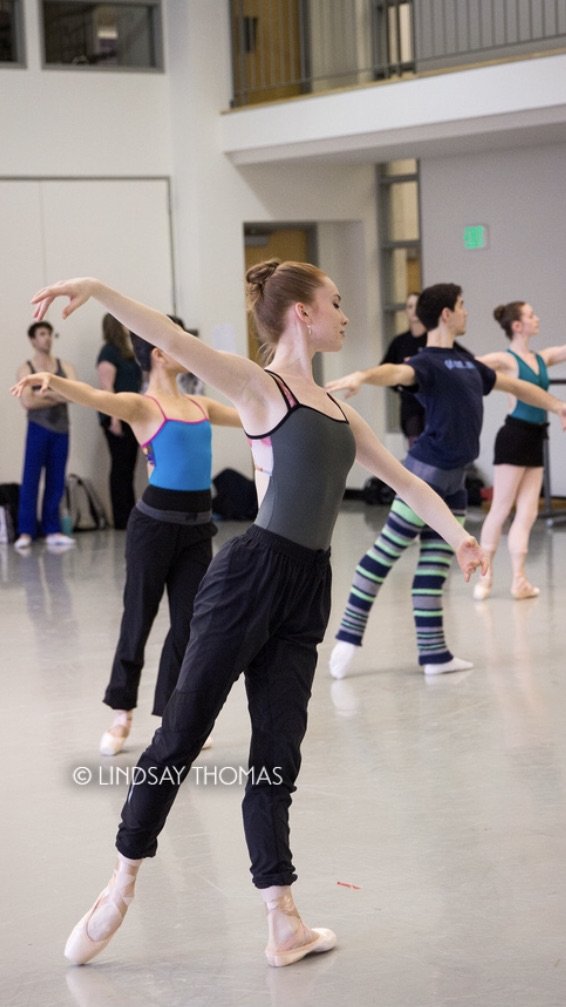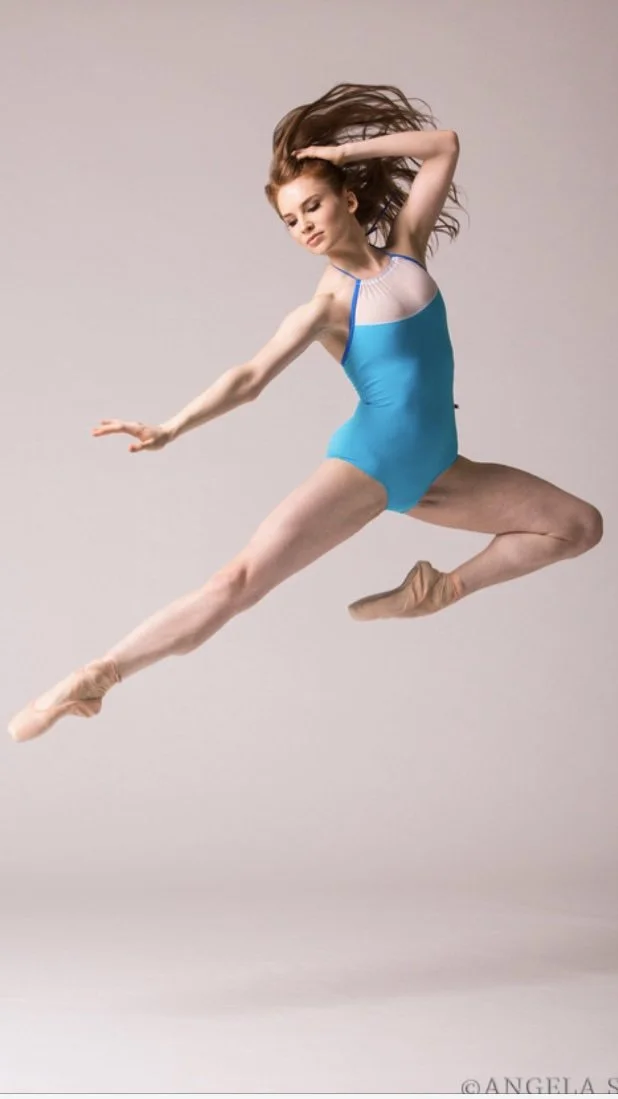
I think I developed a complex about my shoulders over the course of my ballet career…
I knew I had a tendency to elevate my shoulders when performing turns or other movements requiring unilateral balance. What I later came to understand is how my formative pointe years on a beautiful, yet very slippery wooden ballroom floor, affected my movement patterns for years to come.
We did have access to rosin, aside from the times it would be withheld from us from a place of punishment or character-building— however you wish to look at it. Regardless, on a slick, century-old floor, I began to tense my shoulders in order to stay on balance.
On my very first day at PNB School, I headed to my level 8 technique class which is taken completely en pointe. When we got to pirouettes, the instructor told me to make my fourth position wider, and wider, and wider. I was elongated so far that I wasn’t sure how I’d manage to rise up on my toe and bring my back foot all the way up to my knee in a split second. I took the leap of faith, pulling off a clean double, but immediately thereafter collided with the floor in a sudden faceplant.
I couldn’t believe it. I never fell in ballet, even with the slippery floor and all. Now I’m on top tier marley floors with tons of friction, and I’m faceplanting?!
My kinetic chain had been reversed. At my old studio I was lifting from my shoulders to rise up onto pointe and turn, afraid of using the ice rink to generate power for the movement. On marley, I was a different dancer, still opting to lift with my shoulders, but feeling the power of the floor for the very first time.
I soon found that the floor surface gave me confidence and consistency that I couldn’t develop in my previous training, but as my technique improved I couldn’t shake an internalized fear and tension in my turns. When your nervous system is on edge for that many hours of practice, it would take years of de-conditioning to achieve a relaxed sense in turning. But I thought all I had to do was to shove my shoulders down as much as possible to get to that point.
When I got into the company, I started to hear certain cues that did more harm than good. In company class it was “use your lats” constantly. The serious student I always aim to be, I locked down my scapulae so they didn’t even budge when bringing my arms from first to fifth position. (By the way, scapulae are meant glide!). The lats are arm movers— providing shoulder extension, shoulder adduction and internal rotation. So overworking these huge muscles could actually cause rounding of the shoulders and instability of the scapulae! I think this example proves that ballet directors and teachers need extensive training in anatomy…
Then came a comment from a stager, pointing at my upper traps and saying “what’s this?” Mind you, my arms were at rest by my sides when she said it, so nothing was bulging. My cheeks flushed, thinking there was something seriously off about my anatomy. I proceeded to push my shoulders down more, hoping to lessen whatever disruption in line she saw.
Not that I think the comment was warranted, but often the upper traps overwork if the scapular stabilizers are underworked. Now we’re coming full circle… Unless your teacher, stager or director is a certified physio, doctor, or STOTT PILATES instructor, please don’t listen to their anatomical cues. Often highly motivated students will overcorrect, leading to greater instability, pain, and injury.
In my STOTT PILATES instructor training, I’ve become proficient in analyzing posture, adapting programming, and increasing strength, stability and flexibility in a highly-personalized way. In my own postural analysis, I’ve learned that my scapulae are depressed down my back beyond their optimal position (surprise, surprise) and I’m finally strengthening those scapula stabilizers.
Please reach out if I can help you correct your posture and ballet technique, with an anatomically-sound, proven method of Pilates.